


Hello everyone, and thank you for joining our brand-new discussion space dedicated to all things ShapedPlugin Products and WordPress!
This community is designed to be a helpful, vibrant place where users, developers, and WordPress enthusiasts can learn, collaborate, and grow together. See below what you’ll find here:
🔧 WordPress Tips & Tricks
Share your favorite techniques, best practices, and time-saving workflows—or pick up new ones from fellow members.
💬 ShapedPlugin Product Discussions
Have questions, ideas, or feedback about any ShapedPlugin product? If a dedicated space isn’t available yet, feel free to start the conversation right here.
🛠 Troubleshooting Help
Facing an issue? Post it in the community! Our community and team members are here to help you find solutions quickly.
🏆 Success Stories & Case Studies
We’d love to hear how you’ve used WordPress and ShapedPlugin products to build something awesome. Inspire others with your journey.
🤝 Networking & Collaboration
Connect with WordPress users, creators, and professionals from around the globe. Share knowledge, collaborate, and make meaningful connections.
Let’s work together to make this community a welcoming, supportive, and resourceful hub for everyone using WordPress and ShapedPlugin products.
We can’t wait to see your contributions and conversations.
Welcome aboard! 🚀

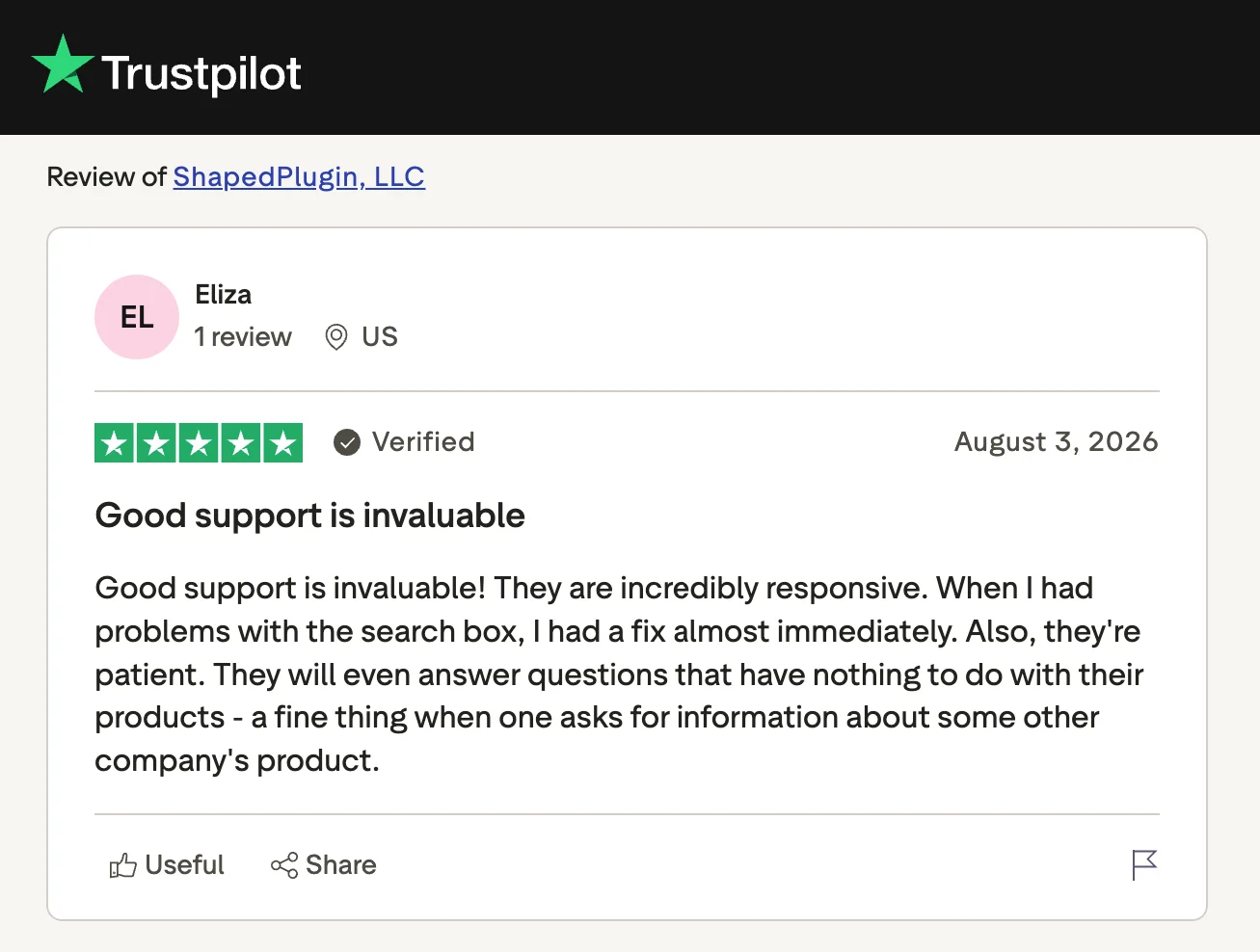
We always say that "Good support is invaluable."
But seeing our clients say it means so much more!
It's because ShapedPlugin truly cares about its customers.
WordPress 7.0 adds a watch() function to the @wordpress/interactivity package. This brand-new function subscribes to changes in any reactive value accessed inside a callback—and reruns it anytime those values change.
Now, you can tie the Interactivity API’s data-wp-watch to a DOM element’s lifecycle and use that for reacting to state changes. But how would a process observe those changes programmatically, independently of the DOM? How could you set something up to run side effects at the store level, set up logging, or synchronize state between stores? The watch() function fills this gap.
Check it out: https://make.wordpress.org/core/2026/02/23/changes-to-the-interactivity-api-in-wordpress-7-0/
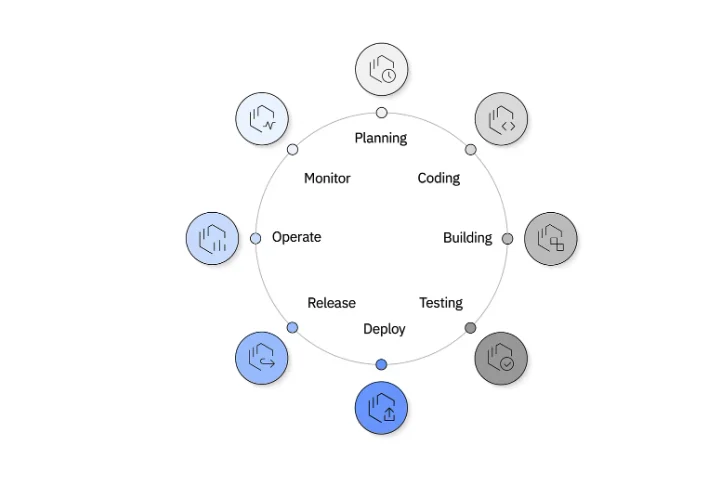
The DevOps lifecycle is designed to optimize the rapid delivery of high-quality software. It includes a series of iterative, automated workflows that run within a larger automated and iterative development lifecycle.
The names and orders of the workflows can vary between organizations, but the DevOps lifecycle typically includes eight core steps.
Last week, Matt Mullenweg made the decision to remove real-time collaboration from WordPress 7.0 and shared that he is not confident the current approach is robust enough to include in Core at this time, citing concerns around surface area, race conditions, server load, memory efficiency, and recurring bugs found through fuzz testing.
Real-time collaboration remains an important and exciting feature for WordPress. Once the immediate release work is complete, a plan will be shared for broader testing and continued iteration to help prepare the feature for a future release.
A CLAUDE.md file will reduce thinking time, token consumption, and API costs. By providing upfront context about your plugin's structure, prefixes, and coding standards, Claude avoids wasteful guesswork and repeated codebase scanning.
This means fewer back-and-forth clarification requests, lower input token usage (since the AI doesn't need to re-analyze patterns from scratch), and faster, more direct responses—ultimately cutting both processing time and expenses per interaction.
The use of Virtual Private Servers (VPS) has increased significantly due to the rise of Artificial Intelligence (AI) and AI agents.
As of 2026, VPS is becoming the preferred, cost-effective infrastructure for hosting AI tools, agents, and local models, offering 24/7 uptime and flexibility compared to traditional hosting.
Bad AGENTS.md files can make your coding agent worse and cost you tokens.
Most developers don't realize their AGENTS.md is the problem. They add rules every time the agent messes up. A few months later, they've got this sprawling document that's actually hurting performance instead of helping it.
Here's why: you've got a limited "instruction budget". Frontier LLMs can really focus on about 150-200 instructions before things get fuzzy. Every rule in your AGENTS.md burns through that budget on every single request, whether it's relevant or not.
The solution? Progressive disclosure. Keep your root AGENTS.md ruthlessly small (3-5 things, max), then nest everything else into separate files that agents pull in when they need them. Smaller token overhead. Better agent focus. Problem solved.
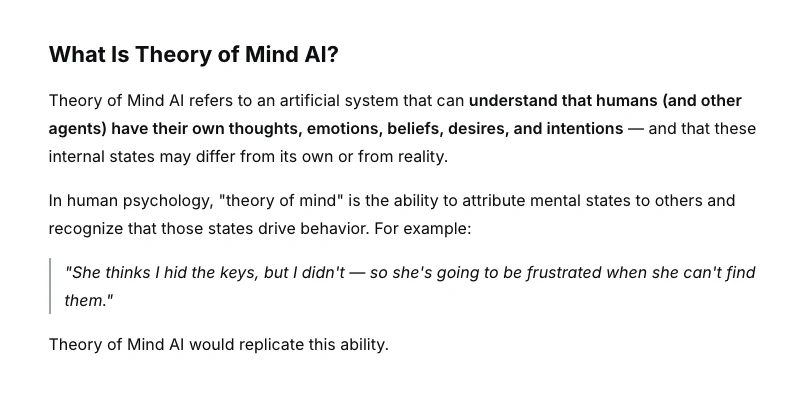
Current AI tells you what's broken. Theory of Mind AI tells you what your user thinks is happening, what they'll feel when they discover the truth, and how to prevent that emotional crash, often before they even ask.
We’re entering a new chapter for the internet. AI agents, smart tools that can create, run, and improve online content, aren’t just ideas or fancy demos anymore. They’re here and already being used.
Fuzz testing (fuzzing) is an automated software testing technique that inputs invalid, unexpected, or random data into a system to find bugs, crashes, and security vulnerabilities. It acts as a "set it and forget it" tool to discover vulnerabilities like buffer overflows, SQL injections, and DoS.